
I Believe I Can Fly
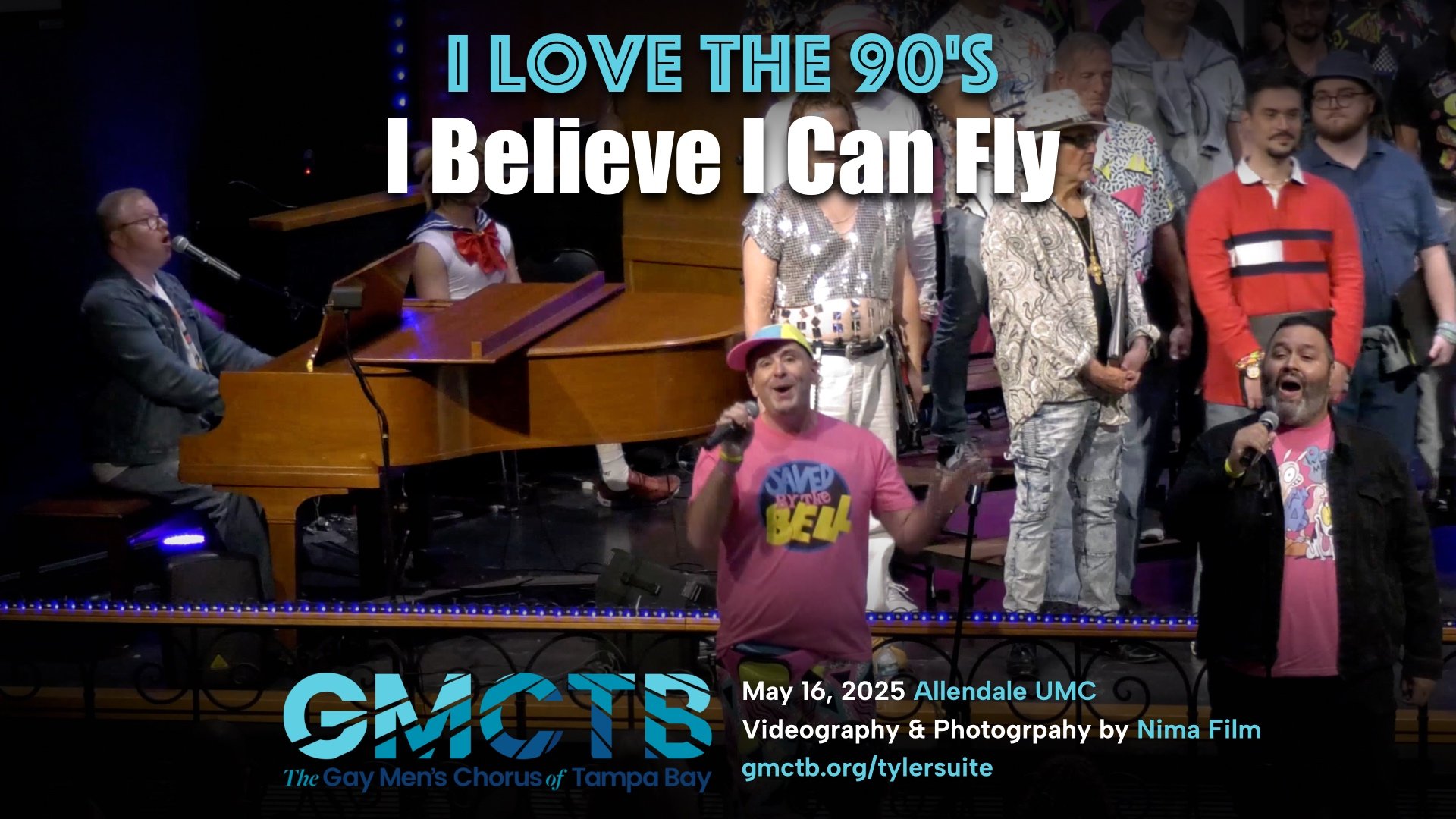
On May 16, 2025, Jeremiah Cummings, Gabriel Irizarry, and Cody Smith-Rollins of the Gay Men’s Chorus of Tampa Bay delivered a soaring, emotionally resonant trio performance of “I Believe I Can Fly”—originally written and recorded by R. Kelly—as part of the chorus’s high-impact concert, “Tyler’s Suite / I Love the 90s”, at Allendale United Methodist Church in St. Petersburg, Florida.
Originally released in 1996, “I Believe I Can Fly” became one of the defining ballads of the decade—an anthem of aspiration, inner strength, and transcendence. For many, the song served as a soundtrack to moments of personal growth and resilience, finding particular resonance within the LGBTQ+ community for its message of rising above limitation, prejudice, and self-doubt. Though the song’s origins are complicated by the controversies surrounding its composer, its message has remained potent—especially when reinterpreted in a new context, with new voices and meaning.
That’s exactly what happened during this performance. The trio of Cummings, Irizarry, and Smith-Rollins approached the piece not merely as a nostalgic throwback, but as a reclamation. Together, they transformed the song into a deeply personal and spiritual affirmation of hope, healing, and possibility. Their voices—distinct in tone yet seamlessly blended—brought a new level of meaning to the familiar lyrics, offering an interpretation rooted in dignity, empowerment, and grace.
The vocal arrangement was rich and intentional: with Cummings delivering powerful high notes that conveyed a sense of triumphant determination; Irizarry grounding the harmonies with warmth and strength; and Smith-Rollins offering a lyrical clarity that made the message of the song feel fresh and heartfelt. Their combined energy filled the sanctuary with a sense of shared flight—lifting the audience into a space of reflection, courage, and joy.
This moment of musical inspiration came during the second half of the concert, which celebrated the exuberant legacy of 1990s pop culture following the emotional weight of Tyler’s Suite, a choral tribute to Tyler Clementi and the struggles faced by LGBTQ+ youth. In that larger context, “I Believe I Can Fly” became a bridge—between grief and renewal, memory and movement, mourning and motivation.
Performing in the sacred and affirming environment of Allendale United Methodist Church, known for its strong support of LGBTQ+ rights and inclusive community, the song’s hopeful message resonated all the more deeply. Here, the act of singing became an act of claiming space—of saying that queer voices not only belong, but soar.
More than a pop ballad, this rendition of “I Believe I Can Fly” became a musical benediction—reminding every person in the room that, despite the weight of the past, they too can rise.